Our early years Exploring Science Through Play (ESTP) teacher course shares interactive, research-informed approaches to exploring science through playful learning experiences. We have been developing new activities for the course to help build science skills in and beyond the classroom.
What is the aim of the activity?
Whenever we embark on creating a new activity, we create a brief outlining its aims and outcomes. These included…
- To reflect the Science Museum Group’s engagement approach ‘to ignite curiosity around science, engineering, technology and maths, by assisting discovery through active participation and social interaction’.
- To showcase a fun and playful approach to science learning and engagement and show the link between the skills used in play with those also used in science.
- To spark discussion about science skills among the teachers, whilst also building confidence in their own skills to help inspire them to bring the approach and run similar activities with their students.
What happens in The Curiosity Game?
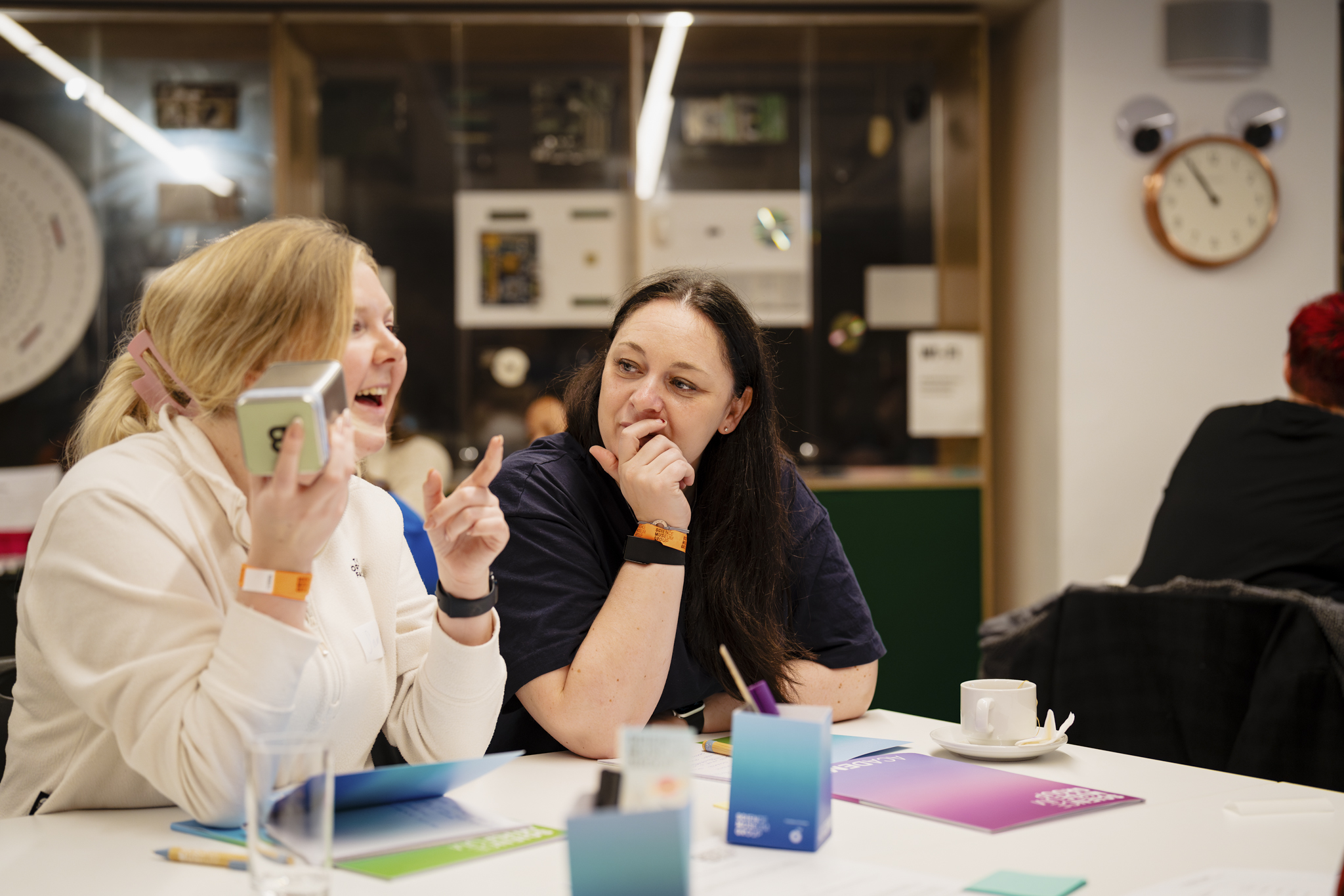
The aim of the activity is for groups to investigate and make predictions of what might be inside a set of sealed boxes. They are given time to explore each of the boxes in any way they want, using all their senses (e.g. shake it, feel its weight, listen to it) – they just can’t open it! The groups record (draw and/or write) any observations that they make and then make a prediction as to what they think will be inside.
Once all the boxes have been investigated, groups are then given a selection of ‘testing objects’, and an empty box to investigate and to compare against the observations and predications they made with the original sealed boxes.
Using all the evidence that they have collected from the observation and investigation, each group make a final decision of what might be inside. At which point the boxes can be opened to reveal what is actually inside.
But, the activity doesn’t end there… After the reveal of what is inside the boxes, the group is asked to think about what skills they had been using during the activity.
These skills will include… asking questions, making observations (using all your senses), making predictions, testing, making decisions (conclusions), classification, talking and sharing ideas (communication & teamwork), using imagination, using evidence to test new ideas, learning from experience (and from mistakes)
Finally, having generated such a great list of skills, it is highlighted that everyone uses these skills and that these are all science skills, and everyone has been working like a scientist. Science is about being curious and exploring the world around us in creative ways.
Supporting teachers
When we run the activity with teachers on the course, we highlight that all these skills are those listed in the working scientifically section of the KS1 curriculum. We also draw attention to the less associated science skills that were used such as creativity, imagination, and teamwork – all of which are central components of working in STEM but are often not talked about as much in science or maths lessons.
Broadening the perception of what science is, is a core element of the activity, as from the science capital research we know that many people may not feel that they are a science-y person or can ‘do’ science. We want to help everyone, students and teachers alike, that science is something that is relevant, valuable and achievable for anyone.
Feedback and adapting ideas
The teachers who attend the Exploring Science Through Play course come from a wide range of experience from working with different groups. Some work with very young children, whilst other teachers work with older students with SEN.
We can’t, and don’t, expect the activity to be run and work in the same way in everyone classrooms, so we always ask the teachers what their reflection of the activity is – and how it might work with children that they work with and if they have ideas for adaptions.
And they always come up with brilliant ideas! Ideas have included creating feely bags to make the exploration more sensory, using different equipment to test the objects, such as using weighing scales or magnets and even highlighting the verbs and adjectives used in the activity to support language and vocabulary skills.
Redeveloping the activity for the classroom
The original activity was principally developed to be use on the ESTP courses, but we always had the ambition to create a version that teachers could take away to help them to deliver the activity with their classes.
This took quite a bit of critical thinking – there were a few challenges that we had work through. One of the practical considerations for using this activity in the classroom included how to source multiple boxes that were easy to access yet affordable. To address this, we experimented with sealable containers that could be easily sourced from common household recyclables. We also considered which testing objects to suggest — these needed to be ones that could be easily sourced in large quantities, were likely already available in classrooms, and had properties familiar to young children. A final consideration was ensuring the instructions were clear and detailed enough to help teachers run the activity independently, supported by helpful photographs — while still remaining concise.
To evaluate the effectiveness of these new considerations in a classroom setting, we carried out classroom testing.
During this process, we aimed to find out:
- Clarity of instructions: Were the activity guidelines clear and easy to follow?
- Accessibility of materials: Could teachers easily source the required equipment?
- Practical challenges: What difficulties, if any, did teachers encounter when running the activity?
- Achievement of learning outcomes: Were the intended outcomes of the activity being met?
- Adaptability: How did teachers modify the activity to suit their groups — for example, by age, class size, or learning and development levels?
We used this information, along with feedback from teachers who took part in the ESTP course, to refine the resource to its final version. We then commissioned photography and underwent copy editing to prepare it for print and distribution.
And finally…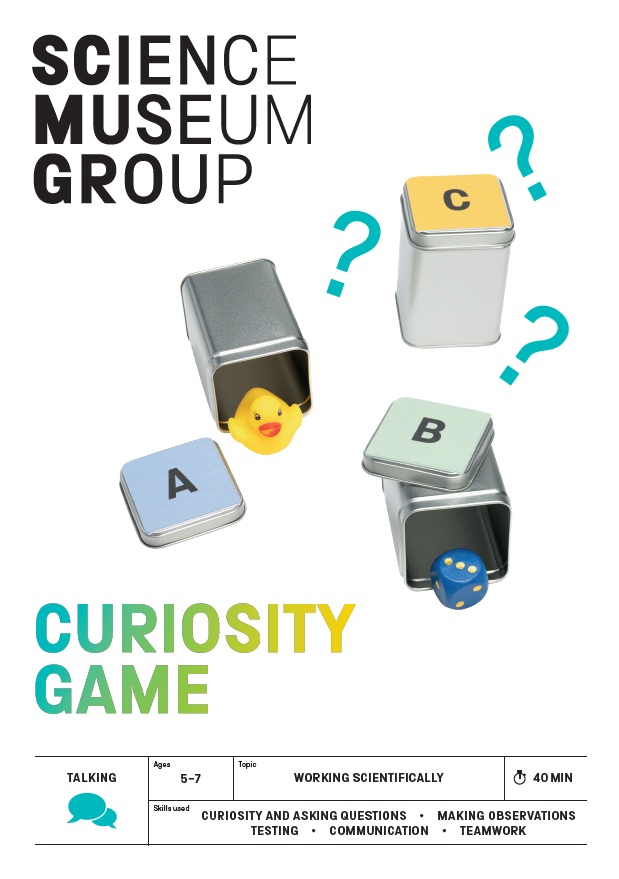
…The Curiosity Game resource is now available
You can see the Curiosity Game activity here.
You can also explore more of our early years resources, activities and research on the resources for early years foundation stage web page.
Our Early Years blog series shares insights from the research, development, and delivery of our work across the Science Museum Group with early years audiences.