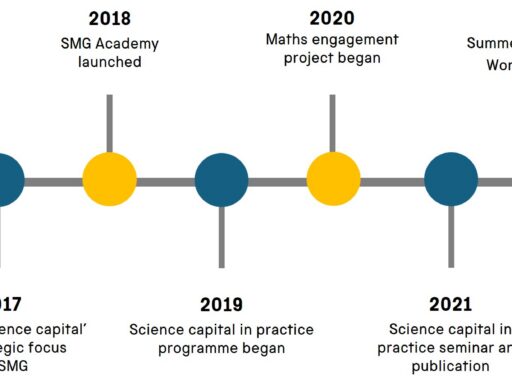
We reflect on the key milestones of the Science Museum Group adopting and working to embed an equitable and inclusive science capital informed approach.
We reflect on the key milestones of the Science Museum Group adopting and working to embed an equitable and inclusive science capital informed approach.
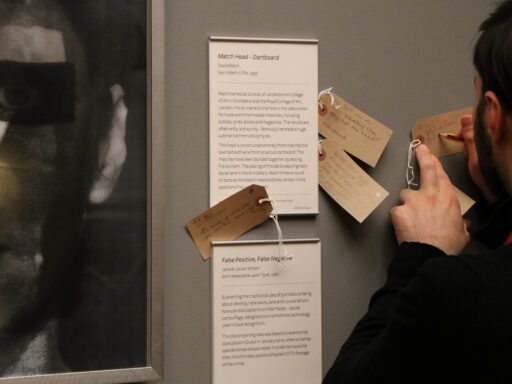
From collections to classrooms, our mission to embed science capital across programmes and people. Aberdeen Archives, Gallery & Museums reflect on their participation in the Science in Your World programme.
International Day of Women and Girls in Science allows us to celebrate women in science, and to reflect on the opportunities to inspire and engage more women and girls with the STEM which shapes our everyday lives.

In this first in a series of blogs on our nationwide Science In Your World programme, Kate Davis and Pete Jeffrey-Bourne introduce the programme and outline our first exciting steps.

In October 2022, Gabriela Heck, a PhD student from Pontifical Catholic University of Rio Grande do Sul (PUCRS), in Brazil, visited Beth Hawkins, at the Science Museum London, to talk about her PhD research around science capital, science museums and inclusion of people with disabilities in STEM fields. Here she shares detail of her research and how she is working to raise awareness of science capital and inclusion in Brazil.

The Science Museum Group have been working with the principle of science capital for almost 10 years. Throughout our journey we have learned a huge amount around what this approach can look like in practice and what challenges we, and our colleagues have faced with it. Here we share our top 5 most commonly asked questions.

What does a science capital informed approach look like in practice? The Science Capital in Practice: Foundations for the Future seminar brought together ideas, experiences, and advice around applying a science capital approach in museums and science centres.

In this fourth part of our Science Capital in Practice: Foundations for the Future blog series, we explore some of the ways that the impact of taking a science capital approach can be tracked.

In part three of our Science Capital in Practice: Foundations for the Future blog series, we look at what embedding a science capital approach has meant for the work and across the different partner organisations.

In part two of our Science Capital in Practice: Foundations for the future blog series, we explore what the programme partners learned about sharing the science capital approach with their colleagues across their organisation.

In part one of our Science Capital in Practice: Foundations for the Future blog series, we explore how taking a science capital approach has helped partner organisations to build and broaden their audiences.
Research around science capital highlights that there isn’t a single place, action or experience alone that will help improve engagement and equity around STEM. Our booklet pulls together science engagement and science capital research to answer the question, what role can informal learning environments play?