Our first question to ourselves was why do museums have interactive exhibits?
At Banbury Museum & Gallery we have always had some simple ‘hands-on’ elements in our galleries, which we have to admit, were mostly aimed at helping to engage and entertain our younger visitors. However, we recognise that interactive exhibits are a hugely valuable interpretation tool which can take a passive interaction into active experience which can help improve content engagement.
Interactives can help bring objects, and their stories, to life by inviting people to have choice and control of their experience and allow them to access and interact with the content first hand. They can foster creativity, spark conversations and collaboration in an inclusive, fun and memorable way – for everyone.
So, as part of the Science in Your World (SiYW) programme, we wanted to focus our project on introducing more interactive elements to our older gallery spaces to support greater engagement with our local content themes.
OUR INSPIRATION…
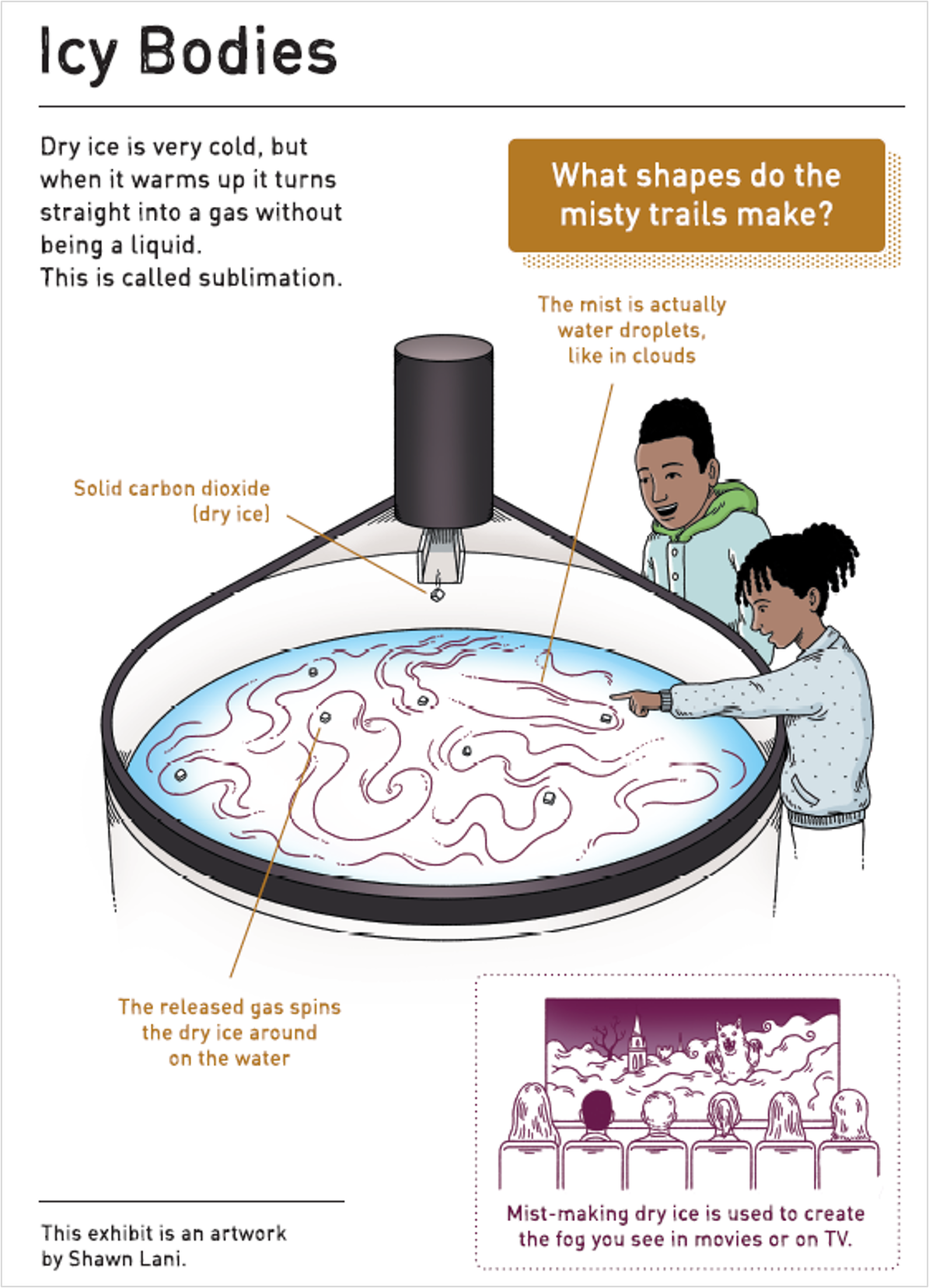
Through the SiYW programme, we had the opportunity to explore and find out more about the Wonderlab Gallery at the Science Museum, and the Wonderlab: The Bramall Gallery at the National Railway Museum. These hands-on galleries are packed with STEM (Science Technology Engineering and Maths) interactive exhibits which have been designed to be intuitive, engaging and accessible.
We were not only interested in the exhibits themselves, we were also intrigued to understand and learn more about the huge amounts of user testing and prototyping work which took place during the development stage of both the Wonderlab galleries to ensure the exhibits met their key learning objectives with the target audiences.
having a go…
Prototyping was an entirely new concept for us. Like many museum professionals in smaller organisations, we were used to trusting our judgement and working to tight deadlines and budgets. The idea of prototyping wasn’t something that we had experience, time or budget to be able to do before.
The Science in Your World programme provided us with both the opportunity and motivation to set out to build a temporary STEM interactive of our own. Just like the exhibits we had seen in the Wonderlab galleries in London and York, we planned to prototype it stage by stage, whilst leaning into and applying a science capital approach.
We also wanted to design and test an interpretation label like the ones used in the Wonderlab galleries which are more graphic focused and have applied the science capital informed reflection points. We saw how these labels were easier for people to understand how to use the exhibits and recognise the science behind them.
Our PILOT interactive…
We decided to create a table-top interactive exhibit, inspired by a static crane that once unloaded cargo from canal boats- right outside our museum and that the interactive exhibit would include three model cranes, three model canal boats and a number of identical weighted cargo/sacks for visitors to hoist up from the boats.
Our aim was to produce a simple and intuitive model which visitors – young and old alike – would enjoy interacting with. Visitors would be able to unload the cargo from the canal boats – collaboratively or competitively.
There were three different designs of crane that people could test out – these included different lengths of crane arms, and one included a simple pulley system. We wanted visitors to see these differences and feel their effect as they moved the cargo from the boats.
We also wanted to test out an interpretation label which would include simple instructions and extension information about how simple machines, like pulleys and levers, make life easier in the real world. We also included an image of an old crane that was used on the canal – which was the inspiration for the exhibit.
building A PROTOTYPE…
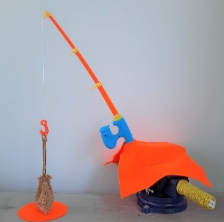
We built several working versions of the exhibit, we started off with mini toy fishing rods with magnets for the cranes. Over time this was evolved to much stronger (and smarter) wooden model cranes.
We also designed two different interpretation labels, in each case we followed the Hook, Inform, Enable, Extend, Reflect (HIEER) engagement tool and include pictures with very simple instructions about the model, a simple explanation about the STEM principles around pulleys and levers and some images of real world examples.
Testing with OUR VISITORS…
Over 500 of our museum visitors, staff and volunteers tested the prototype crane interactive in its different versions, and in different scenarios.
We ran some sessions which observed visitors from a distance, noting down what they did and said, and did some more focused testing where we spoke with people directly, and asked them about their experiences.
What were we looking for and testing?
-
Visitors testing the exhibits Visitor engagement, observing to see if people were getting involved, talking about their experience, asking relevant questions and enjoying it. If they weren’t, we had to think about what we needed to change next time.
- The model, testing the materials, design, durability and maintenance requirements of the various versions, and seeing if users found anything awkward, unreliable or inaccessible.
- The interpretation label, to see if people noticed it and, if so, whether they found it useful and/or interesting.
What did we find out?
For us, this was principally learning opportunity to explore how to develop and test interactive exhibits from scratch. However, we were also keen to see if this idea of a crane interactive was worth considering as a permanent installation in our Waterways gallery, when refurbished in the future. This is what we learned…
- Visitor engagement and enjoyment.
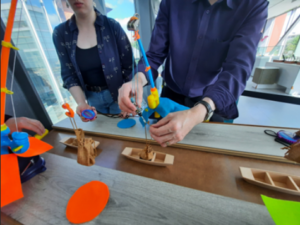
Visitor testing the cranes This was a success for us! People’s behaviours and dialogue suggested the interactive was inviting and easy to use. We observed lots of evidence that people of different demographics were comfortable to approach the exhibit and play with it – making up their own rules and talking with each other. However, some of the learning objectives were not fully met with many visitors not noticing the differences between the cranes and the amount of effort which was needed to unload the boats.
- The model. Broadly the equipment worked and held up well. Although the initial fishing rods were not very robust, we successfully improved this with the wooden model. Some people thought they weren’t allowed to attach the hook to the sack by hand, as they assumed the rules were like ‘hook a duck’ fairground game! We therefore included a picture of a hand on the hook for our second interpretation board.
- Interpretation board. We found that people didn’t really use the interpretation to help or invite them start using the exhibit – but they did refer to it during and after. A lovely interaction we observed was an older visitor looking at the crane photo on the board and talking to his grandchild about the original crane on the canal side. Fewer people than we expected noticed the interpretation label, but we considered that the size and positioning could have been improved.
OVERALL, What did we learn?
Prototyping and testing exhibits proved to be a real eye-opener and learning opportunity for us. It was so interesting to see and hear people’s positive reactions to the interactive, but it was also a shock that many of our original assumptions turned out to be wrong.
We had learned that we had created a good interactive, in terms of engagement and enjoyment, and that very few people were put off by the depiction of STEM equipment or information about machines.
Banbury Museum & Gallery is not known for having STEM collections and displays, and our audience does not typically have high science capital so we were very pleased that our interactive proved to be so inviting and accessible to them.
You can read more about the highlights and experiences from the SiYW programme in the Science in Your World blog series.
What to read next