Established in 2015 by the United Nations, 11th February is International Day of Women and Girls in Science – a day which celebrates the role and contribution of women in science, technology, engineering and maths (STEM) and to globally promote full, equal access to, and participation in, STEM fields for women and girls.
INSPIRING STORIES
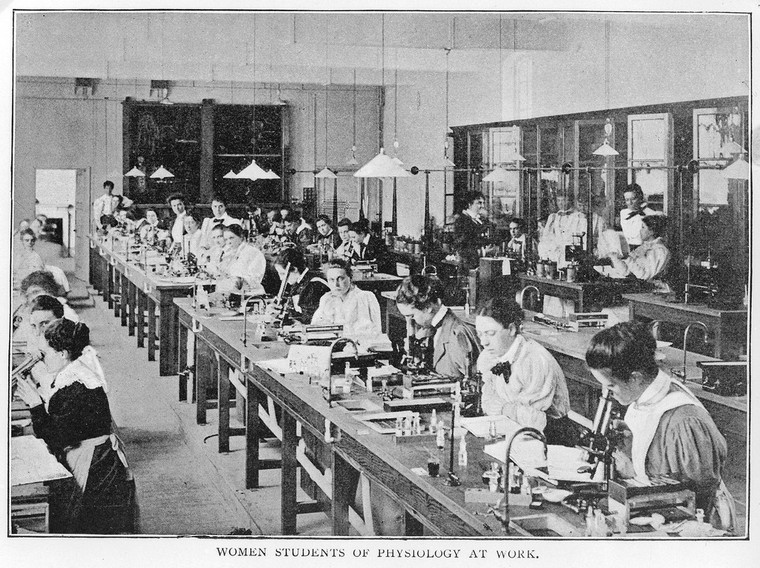
Women have long played an important – but often unacknowledged role in science, technology, engineering, and mathematics.
There are so many engaging and inspirational examples of women’s early participation in innovative science, engineering, computing, maths and other STEM fields that are represented in our Science Museum Group collection – from Ada Lovelace in the 1840s through to Beatrice Shilling’s work in aviation during the Second World War and after. There are further stories about the many wonderful women who have shaped science and the modern world in these women in science blogs.
REPRESENTATION
Yet despite the incredible achievements of women in STEM fields, there are still too many women and girls who are unable to visualise themselves in STEM roles.
This is why International Day of Women and Girls in Science is an important day to provides a platform to showcase the opportunities of STEM careers to women and girls, who may not feel that it is something that they can do or be a part of.
From a science capital perspective, diverse representation in STEM is important to help broaden the perception of ‘who does science’. There are still too many stereotypes of what it means to be a scientist is in popular culture and the media – Albert Einstein is still the ‘science poster boy’ in the adverts that we see on on the tv every day!
Equity and equality in science is crucial for building a better future for the whole of society. One of the things that always gets me thinking about diversity and participation in science is what hasn’t been discovered, or what solution hasn’t been solved because someone has felt excluded from STEM – what insights, creative thinking or perspective has society missed out from?
SHOWCASING SUCCESS
However, we shouldn’t get distracted from celebrating and showcasing the achievements that women have made in STEM fields. Especially as there is an area of STEM where women are strongly represented, often outnumbering their male counterparts in studies and practice – and that is forensic science.
It is perhaps not hard to understand why this is the case in contrast to other areas of STEM. One the key things is that there are a lot of positive role models and media portrayals of women, and diverse, forensic scientists in prime time and popular tv dramas such and Silent Witness, Midsomer Murders, CSI and Bones.
This has not only helped to make the field more visible it has positioned forensic science as an area of STEM which is socially relevant and has a close association with justice and human rights.
INSPIRING WOMEN
This positive association makes forensic science a great topic for an Exploration and Discovery club (or STEM club), as it is an area that can be more inviting and intriguing for people that don’t ordinarily feel that STEM is something that can do or are even inspired to engage with.
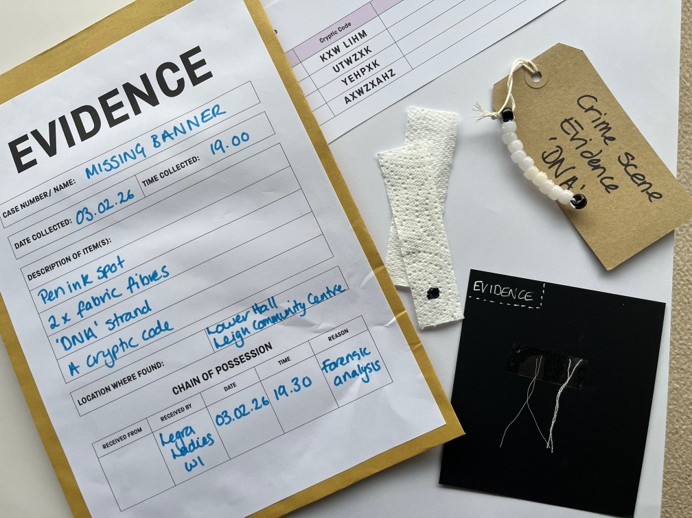
So, with the excuse to celebrate International Day of Women and Girls in Science, and to put our Exploration and Discovery Clubs Academy course into action, we developed and ran a ‘Crime Scene Investigation’ workshop for a community group of over 60 women – nearly all of whom were very vocal about telling us that they ‘don’t, and can’t do science’!
Challenge accepted… we invited them to step into the role of a crime scene investigator and to get hands-on in a forensic science themed workshop using different forensic science techniques. Through fun investigation activities, including our Cipher wheel, they analysed evidence, uncovered clues, and all work together to crack ‘the crime’.
Watching everyone get involved, all engaged, all excited – it was wonderful to observe everyone ‘doing science’ and using their skills and experiences that so few recognised as being essential science skills, including: attention to detail, problem solving, pattern spotting systematic, patience/ persistence, communication and teamwork – all of them worked as scientists (and I can tell you, none of them looked the slightest bit like Einstein!)
REFLECTION
Having an annual day to reflect on the achievements that women have made in STEM fields is important as it also serves remind us that not everyone – both women and men – feel that opportunities in STEM is something that is open to them.
We know from the science capital research that many STEM and career engagement approaches can favour those who are already engaged and will exclude people who face inequalities in wider society.
Taking a science capital approach can helps us apply equitable practice to our work so that a broader range of people can engage with, and participate in science – and there will be even more to celebrate in future International Days of Women and Girls in Science.
What to read next
Our 10 top tips for exploring STEM careers through museums
Relating STEM skills to future careers